The secret to a calmer, happier, longer-lived cat isn’t a bigger toy basket — it’s engaging their brain.
You’ve filled the bowl. You’ve bought the bed. Your cat has a window perch with a view. By most measures, your cat has a good life.
So why is she knocking things off shelves at 2am?
The answer, more often than not, is boredom — and the solution isn’t more toys left on the floor. It’s mental enrichment.
What Is Mental Enrichment, and Why Does It Matter?
Mental enrichment means giving your cat’s brain something meaningful to do — anything that challenges their instincts, encourages problem-solving, or engages their senses.
A cat that “hunts” for hidden kibble around the house is far more relaxed than one that eats from a bowl in 30 seconds and stares at the wall for the rest of the day.
Vets now treat mental wellness as a core part of cat healthcare, not a bonus. Stress and boredom trigger overgrooming, aggression, and a range of behavioural problems — and enrichment directly addresses all of them.
The Science Behind It
Mental stimulation isn’t just “nice to have” — it’s critical for long-term brain health. Enrichment activities stimulate neural pathways, reduce cortisol, and in older cats, actively slow cognitive decline.
A bored cat isn’t just an annoying cat. A chronically understimulated cat is a stressed, potentially unwell one.
Mental Enrichment for Cats
Cats are predators living the life of retirees. Everything about their biology is designed for stalking, hunting, ambushing — and most indoor cats get precisely none of that. What they get instead is a food bowl and a sofa.
The result is often what cat behaviourists call “chronic low-grade frustration” — a state that manifests as overgrooming, midnight zoomies, attention-seeking behaviour, or redirected aggression.
Enrichment for cats works best when it aligns with their natural instincts: to hunt, to climb, to hide, and to observe.
Hunting instincts
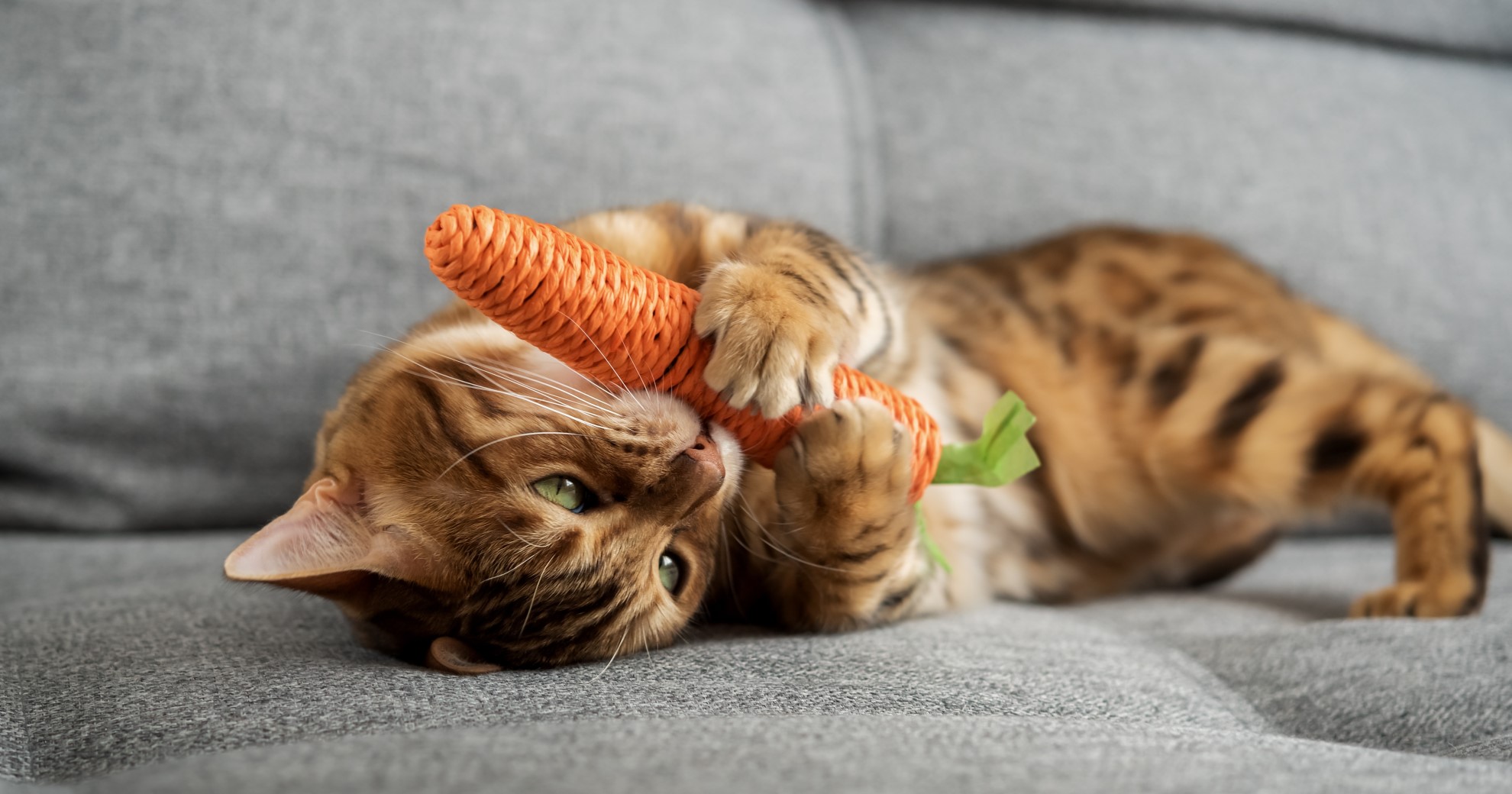
- Wand toys — not just for kittens. Daily interactive play sessions with a wand toy that mimics prey movement are one of the most effective enrichment tools for cats of any age.
- Puzzle feeders — cats benefit enormously from working for their food. Even scattering dry kibble across a textured surface beats bowl feeding.
- Hide their meals — place small portions of food in different locations around the house. Turns every mealtime into a mini hunt.
Climbing and territory
- Vertical space — cats feel safest when they can observe from above. A cat tree, wall-mounted shelves, or even a cleared bookcase shelf gives them what they need.
- Window perches — access to a window with bird or garden views provides hours of passive mental stimulation. A bird feeder placed outside is essentially free enrichment.
- Cardboard boxes and paper bags — endlessly fascinating, free, and endlessly replaced. Never underestimate these.
Sensory enrichment
- Catnip and silvervine — not every cat responds to catnip, but silvervine works on around 80% of cats that don’t. Rotate to keep the effect fresh.
- Outdoor access (safely) — if circumstances allow, a catio (enclosed outdoor run) or even a harness walk introduces a flood of new smells, sounds and sights.
- Auditory enrichment — research has found that cats respond positively to calm human voices and music. Species-specific music, composed in the frequency range cats naturally communicate in, is now commercially available.
Signs Your Cat Needs More Mental Stimulation
- Waking you up at night with zoomies or vocalising
- Overgrooming or bald patches
- Knocking things off surfaces (this is often attention-seeking)
- Aggression seemingly out of nowhere
- Hiding more than usual, or conversely, never leaving you alone
If you’re seeing two or more of these regularly, your cat’s brain needs more to do.